
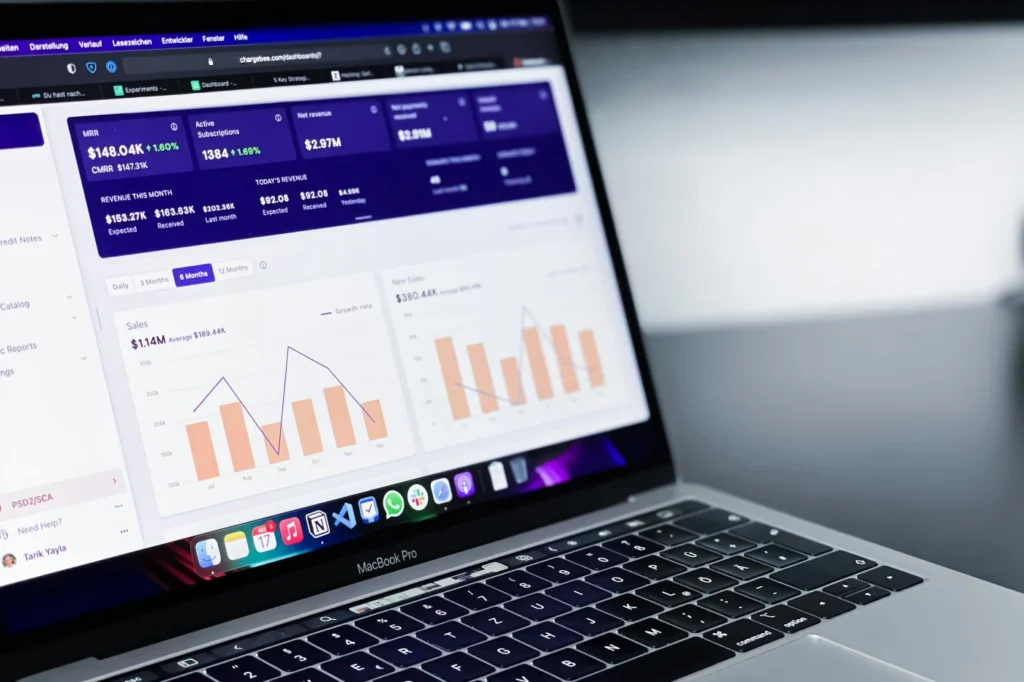
There was a time when business decisions were made primarily on the basis of experience, intuition, and judgement — and to a meaningful extent, they still are. But the decisive shift of the past two decades has been the integration of data and market insight into nearly every significant business decision, from product development and pricing to marketing strategy and talent management. Organisations that make this integration well consistently outperform those that rely on instinct alone.
This article explores how data-driven decision-making actually works in modern business — the types of data organisations use, the process through which insight becomes action, and the balance between data and judgement that the best decision-makers achieve.
What Data-Driven Decision-Making Actually Means
Data-driven decision-making is the practice of basing business decisions on the analysis and interpretation of data rather than on observation, intuition, or anecdote alone. This does not mean removing human judgement from the process — it means informing that judgement with systematically gathered and rigorously analysed evidence.
The most effective organisations do not choose between data and intuition — they combine them. Data identifies patterns, quantifies relationships, and surfaces insights that human intuition alone would miss. Judgement interprets what the data means in context, weighs considerations that data cannot fully capture (organisational values, ethical implications, long-term strategic fit), and makes the final call. The best business leaders are fluent in both languages.
This integration of data literacy and strategic judgement is central to the modern MBA curriculum at institutions like best mba colleges in bangalore, reflecting how fundamentally data analysis has become embedded in virtually every management function rather than remaining a specialist technical skill.
Types of Data Businesses Use
Modern organisations draw on a wide range of data sources to inform their decisions, each offering distinct insights:
Customer and Market Data
Purchase history, browsing behaviour, survey responses, customer feedback, and demographic information all provide insight into who customers are, what they want, and how their needs are changing. This data informs product development, pricing strategy, marketing targeting, and customer experience design.
Operational Data
Data from internal business processes — production efficiency, supply chain performance, employee productivity, quality metrics — helps organisations identify inefficiencies, optimise processes, and allocate resources more effectively.
Financial Data
Revenue trends, cost structures, profitability by product or segment, and cash flow patterns provide the fundamental quantitative basis for most significant strategic and investment decisions.
Competitive and Industry Data
Market share trends, competitor pricing, industry benchmarks, and macroeconomic indicators help organisations understand their position relative to competitors and the broader market context in which they operate.
Social and Sentiment Data
Social media conversations, review platforms, and online sentiment analysis provide real-time insight into public perception, emerging trends, and brand reputation — data sources that barely existed two decades ago but now significantly influence marketing and product decisions.
Exposure to this full range of data types — and the analytical tools used to interpret them — is a hallmark of strong mba colleges in bangalore, where case-based learning frequently requires students to synthesise multiple data sources into coherent, actionable business recommendations.
The Data-Driven Decision-Making Process
Organisations that use data effectively typically follow a structured process, whether formally documented or informally understood:
- Define the decision and the question — clarity about exactly what decision needs to be made and what question the data needs to answer prevents wasted analysis on irrelevant data
- Identify relevant data sources — determining what internal and external data is available and relevant to the decision at hand
- Collect and clean the data — ensuring data quality, consistency, and completeness, which is frequently the most time-consuming stage of the process
- Analyse and interpret — applying appropriate analytical methods (from simple descriptive statistics to sophisticated predictive modelling) to extract meaningful patterns and insights
- Translate insight into recommendation — converting analytical findings into a clear, actionable business recommendation, with explicit consideration of what the data does and does not tell you
- Decide and act — making the final decision, informed by the data but also incorporating strategic judgement, organisational values, and considerations the data cannot fully capture
- Monitor and learn — tracking the actual outcome of the decision against expectations, and feeding that learning back into future decision-making
Market Insights: Understanding the Broader Context
Beyond internal data, businesses rely heavily on market insights — a broader understanding of industry trends, customer needs, competitive dynamics, and macroeconomic conditions — to contextualise their decisions. Market insight typically comes from several sources:
- Primary research — surveys, interviews, and focus groups conducted directly with customers or target markets
- Secondary research — industry reports, government statistics, academic research, and published market studies
- Competitive intelligence — systematic monitoring of competitor activity, positioning, and strategic moves
- Trend analysis — identifying emerging patterns in consumer behaviour, technology adoption, or regulatory direction that may affect future business conditions
The combination of internal data (what is happening within the organisation) and market insight (what is happening in the broader environment) gives decision-makers a much more complete picture than either source alone could provide.
Data-Driven Decision-Making: A Practical Comparison
| Business Function | Traditional Approach | Data-Driven Approach |
|---|---|---|
| Pricing | Set based on cost-plus formula or competitor matching | Dynamic pricing based on demand elasticity, customer segment, and real-time market data |
| Marketing | Broad campaigns based on general assumptions about the audience | Targeted campaigns based on customer segmentation and behavioural data |
| Product Development | New products based on executive intuition or historical success | Features and products prioritised based on customer research and usage data |
| Hiring | Resume screening and interview impressions | Structured assessment combined with predictive analytics on role success factors |
| Inventory Management | Fixed reorder points based on historical averages | Predictive demand forecasting incorporating seasonality, trends, and external factors |
The data-driven approach in each case does not eliminate judgement — it informs judgement with more precise, timely, and comprehensive information, generally producing better outcomes with less guesswork.
The Limits of Data-Driven Decision-Making
Despite its power, data-driven decision-making has real limitations that effective business leaders understand and account for:
Data Reflects the Past, Not Necessarily the Future
Historical data is excellent at identifying established patterns but can mislead when conditions change in ways the data has not yet captured — a new competitor, a disruptive technology, a shift in consumer values. Decision-makers who rely exclusively on historical data risk being blindsided by genuinely novel developments that have no precedent in the dataset.
Not Everything That Matters Can Be Measured
Brand reputation, employee morale, organisational culture, and long-term strategic positioning are all genuinely important to business success but are notoriously difficult to capture fully in quantitative data. Organisations that optimise exclusively for what is easily measured risk neglecting factors that matter just as much but resist simple quantification.
Data Quality and Bias
Data is only as good as its collection methodology. Biased samples, incomplete datasets, and poorly designed surveys can produce analysis that looks rigorous but leads to flawed conclusions. Critical evaluation of data quality and methodology is an essential skill alongside the technical ability to analyse data.
Developing this critical judgement — knowing not just how to analyse data but when to trust it and when to question it — is one of the most valuable outcomes of a rigorous b schools in bangalore education, distinguishing graduates who can genuinely add strategic value from those who can merely run analyses.
Building Data-Driven Decision-Making Capability in Organisations
Organisations seeking to strengthen their data-driven decision-making typically invest in several areas simultaneously:
- Data infrastructure — systems that collect, store, and make data accessible and usable across the organisation
- Analytical talent — professionals with the skills to extract meaningful insight from data, not just produce reports
- Data literacy across the organisation — ensuring that decision-makers at all levels can interpret and critically evaluate data, not just specialists
- A culture of evidence-based decision-making — where data is genuinely used to inform decisions, not simply gathered to justify decisions already made
Professionals who graduate with strong analytical capability from a leading programme offering a best institute for mba in bangalore find themselves well-positioned for roles spanning strategy, consulting, marketing analytics, and general management — reflecting how thoroughly data fluency has become a baseline expectation across business functions.
Key Takeaways
- Data-driven decision-making combines rigorous data analysis with human judgement — it does not replace judgement, it informs it
- Businesses draw on customer, operational, financial, competitive, and social data to build a comprehensive decision-making picture
- A structured process — from defining the question to monitoring outcomes — distinguishes effective data-driven decision-making from ad-hoc analysis
- Market insights, gathered through primary and secondary research, provide essential external context that internal data alone cannot capture
- Data has real limitations — it reflects the past, cannot measure everything that matters, and is only as reliable as its underlying quality
Conclusion
The organisations that make the best decisions in the modern business environment are not the ones that have abandoned judgement in favour of data, nor the ones that ignore data in favour of instinct. They are the ones that have learned to combine both — using data to sharpen, challenge, and inform judgement rather than replace it. For business professionals, developing fluency in both languages — the quantitative rigour of data analysis and the contextual wisdom of strategic judgement — is one of the most valuable capabilities a modern business education can provide.
FAQs
1. What is data-driven decision-making?
Data-driven decision-making is the practice of basing business decisions on systematic analysis of data and evidence, rather than relying solely on intuition or anecdote. It combines rigorous data analysis with human judgement to produce more informed, confident decisions.
2. What types of data do businesses typically use?
Businesses draw on customer and market data, operational data, financial data, competitive and industry data, and increasingly social and sentiment data from online platforms — combining multiple data sources to build a comprehensive decision-making picture.
3. Can data-driven decision-making replace human judgement entirely?
No, and attempting to do so is a common and costly mistake. Data excels at identifying patterns and quantifying relationships, but human judgement is essential for interpreting context, weighing non-quantifiable factors, and making decisions under genuine uncertainty that data alone cannot resolve.
4. What skills do business professionals need for data-driven decision-making?
Core skills include statistical literacy, the ability to critically evaluate data quality and methodology, proficiency with analytical tools (Excel, SQL, visualisation software, and increasingly basic programming), and the judgement to translate analytical findings into actionable business recommendations.
5. What is the difference between data and market insight?
Data typically refers to quantitative information, often internal to the organisation (sales figures, customer behaviour, operational metrics). Market insight is the broader understanding derived from combining data with external research, industry knowledge, and contextual analysis — it is the meaning extracted from data, not just the data itself.
6. What are the risks of relying too heavily on data?
Over-reliance on data risks missing genuinely novel developments that have no historical precedent, neglecting important factors that are difficult to quantify (culture, reputation, long-term strategic fit), and drawing flawed conclusions from biased or poor-quality data without sufficient critical scrutiny.
7. How has technology changed data-driven decision-making in business?
Technology has dramatically expanded both the volume and variety of data available (including real-time social and behavioural data) and the analytical power available to interpret it (predictive modelling, machine learning, automated dashboards) — making data-driven decision-making faster, more granular, and more accessible across organisational levels than in previous decades.
8. Is data-driven decision-making only relevant to large companies with big data resources?
No. While large organisations often have more sophisticated data infrastructure, small and medium businesses can and increasingly do use data-driven approaches — customer surveys, basic sales analytics, social media insights, and industry research are all accessible tools that improve decision quality regardless of organisational size.