
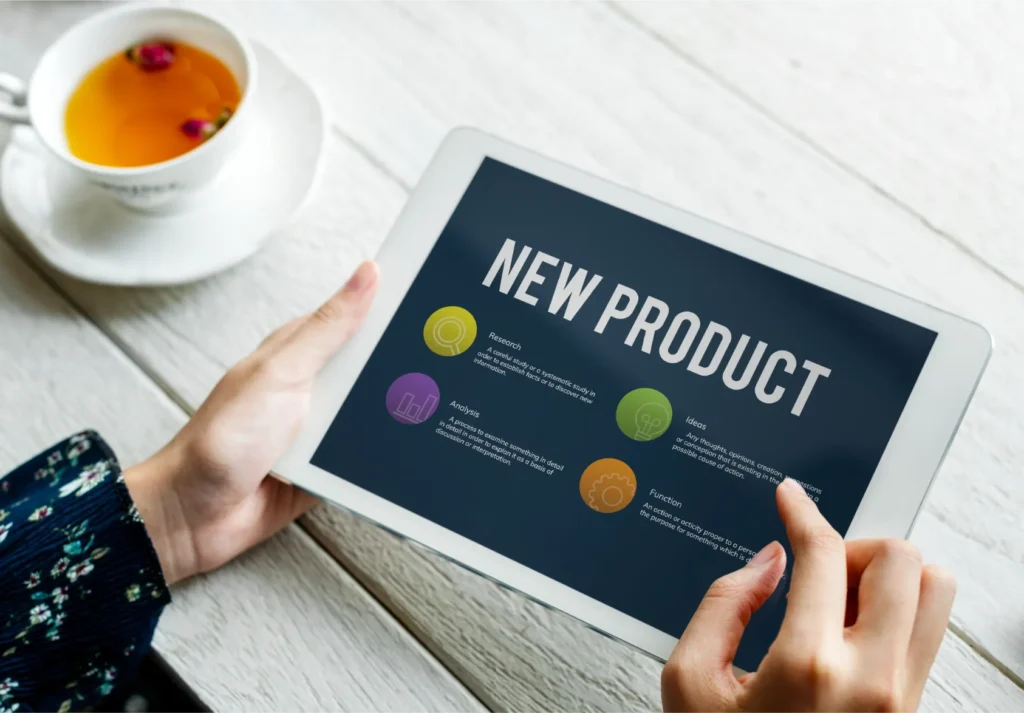
Behind every product you buy, there is a process. Someone had an idea, tested whether it solved a real problem, built it, refined it, and eventually launched it. That journey, from the first spark of a concept to a product sitting on a shelf or appearing in an app store, is what product development is all about.
For students of marketing and management, understanding this process is essential. It shows up in case studies, strategy discussions, and in the day-to-day decisions of product teams. Students at the best MBA colleges in Bangalore regularly work through product development scenarios as part of their core coursework, because few skills are more transferable across functions than knowing how products reach the market.
Stage 1: Idea Generation
Every product starts with a problem. Idea generation is the stage where a company deliberately searches for problems worth solving or opportunities worth pursuing. The goal is volume first, quality later.
Common sources of ideas include customer feedback, competitor analysis, internal brainstorming, market research, and emerging technology trends. Some of the most disruptive products in recent decades came not from research labs but from someone paying close attention to what frustrated ordinary users.
At this stage, no idea is dismissed outright. The discipline comes in the next step.
Stage 2: Idea Screening
Not every idea deserves resources. Screening is the filter that separates promising concepts from those that are technically unfeasible, too expensive to build, too small a market to justify, or already being done better by a competitor.
Typical screening criteria include market size, potential profitability, alignment with company capabilities, regulatory considerations, and the degree to which the idea solves a genuine customer problem.
Students at MBA colleges in Bangalore often use structured evaluation matrices during this phase in classroom exercises, giving each criterion a weighting and scoring ideas against them.
Stage 3: Concept Development and Testing
Once an idea survives screening, it needs to be shaped into a concept. A concept is more specific than an idea: it defines who the product is for, what problem it solves, how it works at a high level, and what sets it apart.
Concept testing then takes this description to a sample of the target audience. Are people interested? Do they understand the benefit immediately? Would they pay for it? What would they change?
The feedback from this stage often surprises development teams. Features they assumed were essential turn out to be irrelevant, while small details they almost cut become the product’s selling point.
Stage 4: Business Analysis
Can It Actually Work as a Business?
This is where the idea meets financial reality. Business analysis estimates the projected costs of development and production, the likely price customers will pay, the size of the addressable market, and the timeline to profitability.
A product can be genuinely innovative and still fail this stage if the economics do not work. High development costs, a niche market, or strong existing competition can all make an otherwise good idea unviable.
This stage produces what is often called a go or no-go decision. Many ideas reach this point and are shelved, not because they were bad ideas, but because the numbers did not support investment.
Stage 5: Product Development and Prototyping
For the ideas that pass business analysis, development begins. This is where engineers, designers, and product managers build the actual product, usually starting with a prototype or minimum viable version.
A prototype does not need to be perfect. It needs to be testable. The goal is to get something real into the hands of users as quickly as possible so the team can learn what works and what does not before investing heavily in full-scale production.
Iteration is the core of this stage. Feedback from prototype testing leads to refinements, which lead to further testing. The best development teams treat this as a loop, not a linear sequence.
From Prototype to Market: The Final Stages
Here is a summary of the full journey before we go deeper into the final two stages.
| Stage | Primary Focus | Key Output |
|---|---|---|
| Idea Generation | Finding problems worth solving | Raw idea pool |
| Screening | Filtering for viability | Shortlisted concepts |
| Concept Development | Refining and testing the idea | Defined concept with target market |
| Business Analysis | Financial and market feasibility | Go/no-go decision |
| Prototype and Testing | Building and validating the product | Refined prototype |
| Market Testing | Pilot launch with real users | Market feedback and sales data |
| Commercialisation | Full-scale launch | Product in market |
Stage 6: Market Testing
Before a full launch, many companies run a limited market test: releasing the product to a specific geography, a specific customer segment, or through a single retail channel. This provides real sales data without the full risk of a national or global rollout.
Market testing reveals things that no amount of lab testing or focus groups can predict, including how customers actually use the product, whether the pricing holds, and how retail partners or digital platforms respond to it.
For students at top MBA colleges in Bangalore, analysing real market test case studies is a standard part of marketing strategy modules.
Stage 7: Commercialisation
Commercialisation is the full launch. At this stage, production scales up, marketing campaigns go live, distribution channels are activated, and the product officially enters the market. This is usually the most expensive single stage in the entire process.
A launch plan typically covers pricing strategy, distribution channels, promotional activities, sales targets for the first 90 days, and a response plan if early results differ from projections.
Even well-developed products can underperform at launch if the commercialisation plan is weak. Equally, a modest product can punch above its weight with a smart launch strategy. This is why commercialisation skills are deeply valued across marketing roles.
Why This Process Matters for Management Students
Understanding new product development (NPD) is not just useful for those who want to work in product management. It matters for anyone who will work in marketing, finance, operations, or strategy because products touch every function of a business.
The process also teaches broader skills: structured problem-solving, cross-functional collaboration, market orientation, and financial discipline. These are the exact competencies that programmes at top B schools in Bangalore train students to demonstrate.
Knowing how a product moves from idea to market means you can contribute meaningfully to those decisions, not just execute instructions from someone else who does.
Key Takeaways
- New product development follows a structured process: from idea generation and screening through to prototype testing and commercialisation
- Idea screening filters out concepts that are not financially or technically viable before resources are committed
- Concept testing with real customers is one of the most important early-stage activities and often surprises development teams
- A prototype does not need to be perfect; it needs to be testable and capable of generating useful feedback
- Market testing before a full launch reduces the risk of a costly nationwide failure
- Commercialisation is the most expensive stage and requires as much planning as product development itself
Conclusion
A new product does not appear from nowhere. It is the result of a deliberate, structured process that balances creativity with commercial rigour, customer insight with technical feasibility, and speed with accuracy.
For management students, understanding this journey is not just useful in exams. It is a lens that helps you evaluate companies, contribute to strategy discussions, and eventually lead product teams. Whether you are applying to a standalone business programme or exploring PGDM colleges in Bangalore, the ability to think through product development clearly is a skill that will serve you throughout your career.
FAQs
- What is new product development (NPD)?
New product development is the complete process of bringing a new product to market, from the initial idea through research, design, testing, and commercial launch. - How long does it take for a product to go from idea to market?
It varies significantly. Simple consumer products might take 12 to 18 months. Complex technology products or pharmaceuticals can take years. The timeline depends on the industry, regulatory requirements, and how much iteration the product needs. - What is a minimum viable product (MVP)?
An MVP is a product with just enough features to be usable and testable by early customers. It allows companies to gather real feedback with minimal development investment before building a full version. - Why do most new products fail?
Common reasons include poor market research, a weak value proposition, inadequate testing before launch, wrong pricing, poor distribution strategy, and launching into a market that was not ready for the product. - What is the difference between a product concept and a prototype?
A concept is a detailed description of what the product will be, who it is for, and why it matters. A prototype is a physical or functional version of that concept, built for testing purposes. - What role does market research play in product development?
Market research underpins every stage. It informs which ideas are worth developing, what customers actually want, how to price the product, and how to position it against competitors at launch. - How is product development taught in MBA programmes?
It is typically covered in marketing strategy and product management modules, using case studies of real product launches, both successful and failed. Students often work through simulated development decisions as part of group projects. - Can a product skip stages in the development process?
Some companies, particularly startups, compress or combine stages to move faster. However, skipping stages entirely tends to increase the risk of launching a product that the market does not want, at a price that does not work, into channels that are not ready for it.